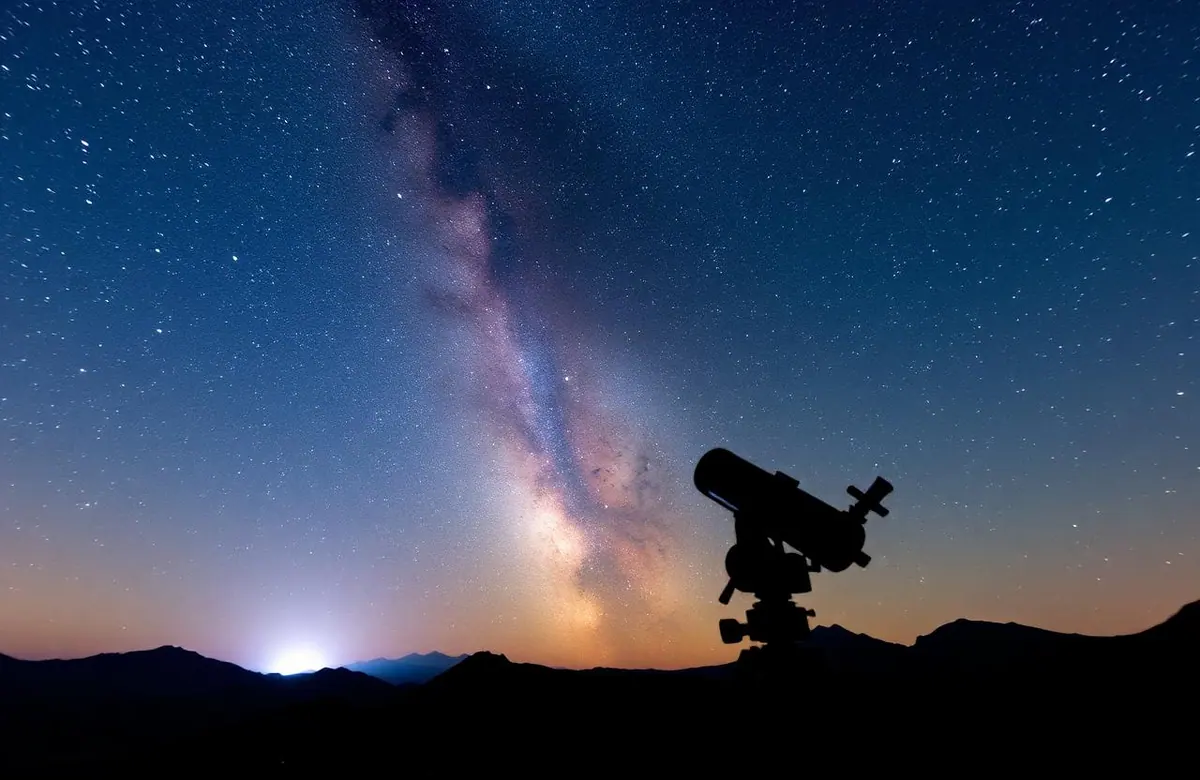
Tenerife has one of the clearest night skies on Earth. Teide National Park was named a Starlight Tourist Destination in 2014, sits above 2,000 m with more than 300 clear nights a year, and the cloud layer usually sits below you rather than between you and the stars. Worth it? On a clear, moonless night, yes.
This guide is the practical version: where to actually stargaze along the TF-21, the best months and moon timing, the real call between self-driving and booking a tour, and what you'll genuinely see overhead. It's written for travellers who want real logistics, not a glossy pitch. Last checked June 2026.
The setting
Why Tenerife's night sky is world-class
Three things make Tenerife exceptional for stargazing, and none of them are marketing. The whole show happens inside Teide National Park, which holds a Starlight Tourist Destination designation awarded in 2014. The skies above it stay clear more than 300 nights a year.
The Instituto de Astrofísica de Canarias runs the Teide Observatory at Izaña, 2,390 m up the mountain. Professional astronomers chose this spot for the reasons you would: high altitude, stable air, and almost no light pollution once you leave the resorts behind.
One caveat worth stating early. The observatory itself is restricted, open to guided tours only, so it explains why the sky is so good rather than serving as a place you can turn up to with a flask and a deck chair. The stargazing you do yourself happens lower, on the plateau around 2,000 m.
The verdict
Is Tenerife stargazing worth it? The honest verdict
Yes, with conditions. On a clear, moonless night at 2,000 m, the Milky Way is bright enough to throw a faint shadow, and you'll see more stars than most people see in a lifetime. That's the version everyone photographs, and it lives up to it.
Here's when to skip it. A full moon washes out the faint detail, so a clear night near full moon is a wasted trip for deep-sky views. Calima, the Saharan dust haze, can grey out the whole sky with no warning. And if your idea of a holiday is not leaving Costa Adeje after dark, an hour-plus each way up a mountain road will feel like a chore.
Be straight with yourself before you commit a night to it. Done right it's a highlight. Done on the wrong night, it's a long cold drive for a hazy sky.
Where to go
Where to stargaze in Tenerife, spot by spot
Everything good happens along the TF-21, the road that climbs through Las Cañadas del Teide. The viewing spots sit around 2,000 to 2,100 m on the plateau, not up at the observatory. Here's where to actually point your eyes.
| Spot | Access | Effort | Best for |
|---|---|---|---|
| Minas de San José | Roadside parking off the TF-21 | None — step out of the car | Photographers, lunar foregrounds |
| Llano de Ucanca | Easy road access | No walking | Big-sky views without effort |
| Montaña de Guajara | On foot from the TF-21 | Moderate-to-hard hike | Fit walkers wanting a high horizon |
| Teide Observatory | Guided tours only | Booked visit | Seeing why the sky is this good |
| Parador de Las Cañadas del Teide | Stay overnight on the plateau | None — step outside | Skipping the night drive |
Minas de San José is the photographer's pick. The terrain looks lunar, pale pumice fields with the cone behind, and there's parking right at the viewpoint off the TF-21. If you want the Milky Way arching over something otherworldly in frame, start here.
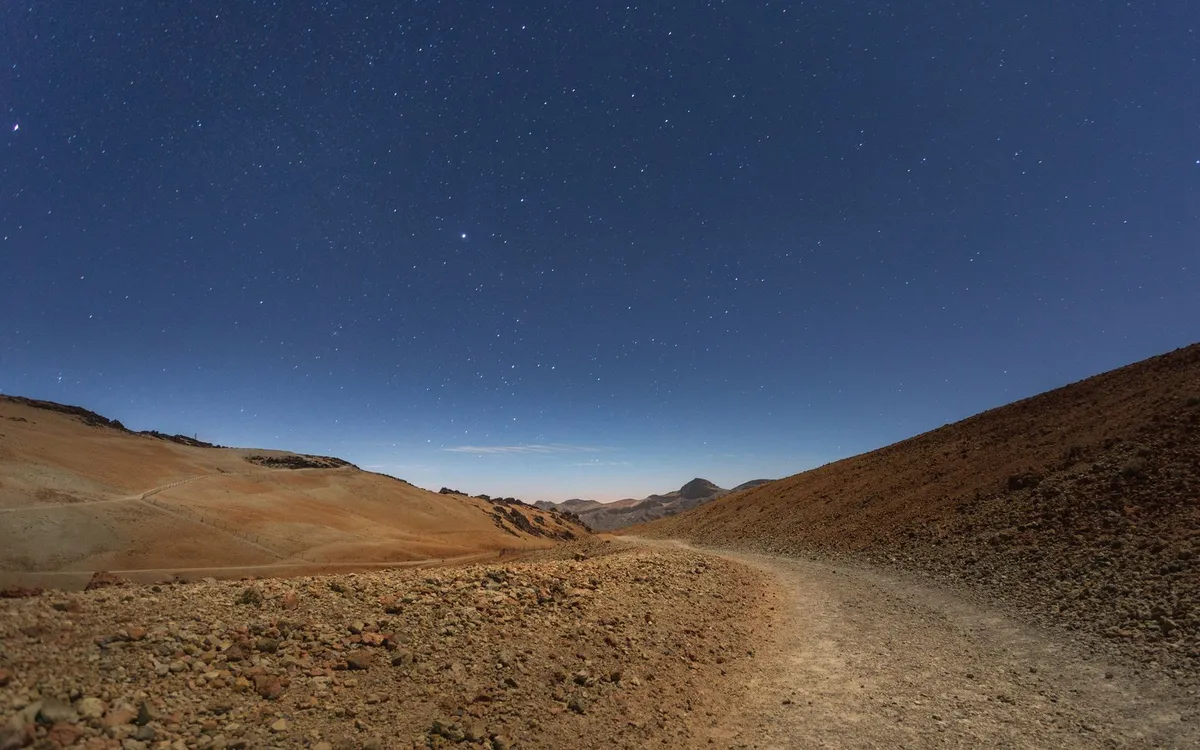
Llano de Ucanca opens onto a wide flat valley, so you get horizon in every direction. Easy road access, no walking, good for anyone who wants the big-sky feeling without effort.
Montaña de Guajara is the reward option. It needs a moderate-to-hard hike, so it's not a casual evening plan. What you get for the climb is a high panoramic horizon clear of any headlight, but only attempt it if you're fit and properly prepared.
The Teide Observatory at Izaña is the one place you can't freelance. It sits higher, at 2,390 m, and public access is guided tours only. Treat it as the reason the sky is this good, not a stargazing stop.
Staying at the Parador de Las Cañadas del Teide changes the whole equation. You're already on the plateau, so you step outside for the darkest hours and skip the night drive entirely. It's the simplest way to do this if you'd rather not drive the TF-21 twice in the dark.
When to go
Best time and conditions for stargazing: month, moon and calima
Timing matters more than location. Get the month and the moon right and an average spot on a good night beats a great spot on a bad one.
For the Milky Way core, the bright dense band everyone wants, come June to August. Autumn and winter trade that for other targets: Andromeda in autumn, the Orion Nebula in winter. There's no truly bad season up here, just different things overhead.
Then there's the moon. A new moon gives you the darkest skies, so plan your trip around the lunar calendar, not only the weather. A bright moon is the most common reason a clear night still disappoints.
Two local conditions pull in opposite directions, and people constantly confuse them. The cloud inversion is your friend: the sea of clouds usually sits below the 2,000 m plateau, which means you stargaze above the weather while the coast sits under grey. Calima is the opposite. It's Saharan dust haze that can roll in and degrade the entire sky, and it's unpredictable. If calima is forecast, postpone. For wider trip planning, our take on the best time to visit Tenerife covers the seasons in full.
The decision
Stargazing in Tenerife: do it yourself or book a tour?
This is the decision that actually matters, and most pages dodge it because one answer pays them. Here's the version most pages won't give you.
Self-drive
Cheaper, your own timing, total quiet — if you're happy on a dark mountain road.
- You're comfortable on mountain roads in the dark
- You've packed warm layers
- You mainly want to look up, photograph and sit in the quiet
Guided tour
Transport, a telescope and a guide who can find Andromeda for you.
- You'd rather not drive the TF-21 at night
- You want a telescope and someone who can aim it
- You want hotel pickup so the whole evening is handled
Pick self-drive if you're comfortable on mountain roads in the dark, you've packed warm layers, and you mainly want to look up, photograph, and sit in the quiet. You'll save money, set your own timing, and stay as long as you like. You'll also be driving the TF-21 back down in the cold and dark afterwards, which is the part people underestimate.
Book a tour if you don't fancy the mountain road at night, you want a telescope and someone who can actually find Andromeda for you, or you want hotel pickup so the whole evening is handled. A guide turns a field of stars into named objects, which for most first-timers is the difference between nice and memorable.
If you'd rather not drive the TF-21 in the dark and cold, a small-group tour solves every part of it: transport, telescope, and a guide who knows the sky.
Small-group stargazing tours: from $65 per person (checked June 2026).
For a couples or special-occasion version, a private Teide sunset trip pairs sunset over the cloud sea with the night session after dark.
Self-drive
Self-drive logistics and what to bring
The road up is the TF-21. From the south resorts you climb through Vilaflor; from the north you go via La Orotava. Both are fully paved and fine in a standard hire car, but they're winding and unlit, so take them slowly after dark.
Drive times are real and worth planning around. From Costa Adeje or Los Cristianos, budget 60 to 90 minutes. From Puerto de la Cruz, about 60. Parking is available at the major designated viewpoints along the TF-21, including those near Minas de San José and Llano de Ucanca.
On clothing, don't underestimate the altitude. It's far colder up here at night than on the coast, even in August. The AEMET mountain station at Izaña (2,369 m) records average night-time lows around 10–14°C (50–57°F) in summer and 1–2.5°C (34–37°F) in winter, with frost on most winter nights. The viewing spots sit a touch lower at roughly 2,000 m, so marginally milder, but the gap from the coast is real. Bring a proper warm layer, a hat, gloves in winter, and a head torch with a red-light mode so you don't wreck your night vision or anyone else's.
A hire car is the simplest way to do this on your own. See car rental if you haven't sorted one yet.
Overhead
What you'll actually see in the Tenerife night sky
The headline act is the Milky Way. From June to August its core, the bright dense heart of the galaxy, sits high and visible to the naked eye, no equipment needed. That alone is why most people make the trip.
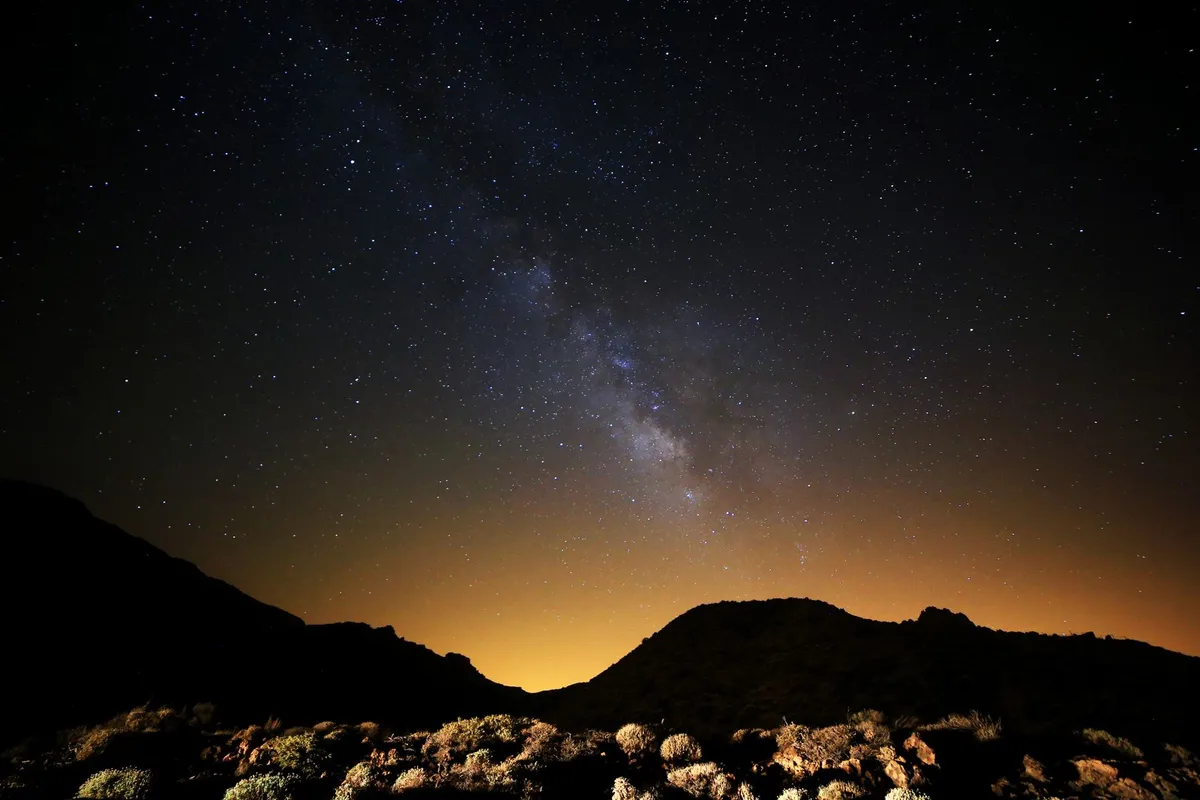
Through autumn, the Andromeda Galaxy becomes the target, the most distant thing you can see without a telescope. Winter brings the Orion Nebula, a genuine stellar nursery you can pick out with binoculars. Planets shift through the sky by season, so check what's up for your specific dates before you go.
By night the cone you ride up to by day on the Mount Teide cable car becomes a black silhouette against the stars, which is part of why the photographs work so well here.
If you want a telescope on these objects and someone to aim it, that's where a guided trip earns its price.
Private sunset and stargazing tours: from $250 per group (checked June 2026).
Good to know
Frequently asked questions
Can you see the Milky Way from Tenerife?
Yes. From June to August the Milky Way core is visible to the naked eye from the TF-21 plateau, no telescope needed. Teide National Park's altitude and 300-plus clear nights a year make it one of the better places in Europe to see it. Aim for a new moon with no calima for the clearest view.
Can you stargaze in Tenerife on your own?
Yes. The viewpoints along the TF-21 at around 2,000 m are open and free, so self-drive stargazing is straightforward. You'll need a hire car, warm layers, and a red-light torch. The one place you can't visit alone is the Teide Observatory at Izaña, which is guided tours only.
What is the best month for stargazing?
There's no single best month, it depends what you want to see. June to August is peak for the Milky Way core. Autumn and winter bring Andromeda and the Orion Nebula instead. Whatever the month, plan around the days near a new moon.
Do you need to book a stargazing tour in advance?
For guided tours, booking a day or two ahead is sensible, especially around a new moon when those dates are most in demand. Self-drive needs no booking at all. Most tours include hotel pickup from the south and north resorts, so reserve once your dates and the moon phase line up.
Related on TenerifeTourism
Sources for this guide: Teide National Park / Starlight Foundation for the Starlight Tourist Destination designation; the Instituto de Astrofísica de Canarias (IAC) for the Teide Observatory at Izaña; and AEMET (Izaña mountain station, 2,369 m) for the night-time temperature figures. Prices checked June 2026.
About our research
TenerifeTourism.com is an independent travel research hub. Our editorial team compiles each guide from official sources — the TITSA transport authority, the Canary Islands tourism board, and hotel operators' own data — and we flag clearly when a detail is confirmed versus estimated. Read our full methodology.