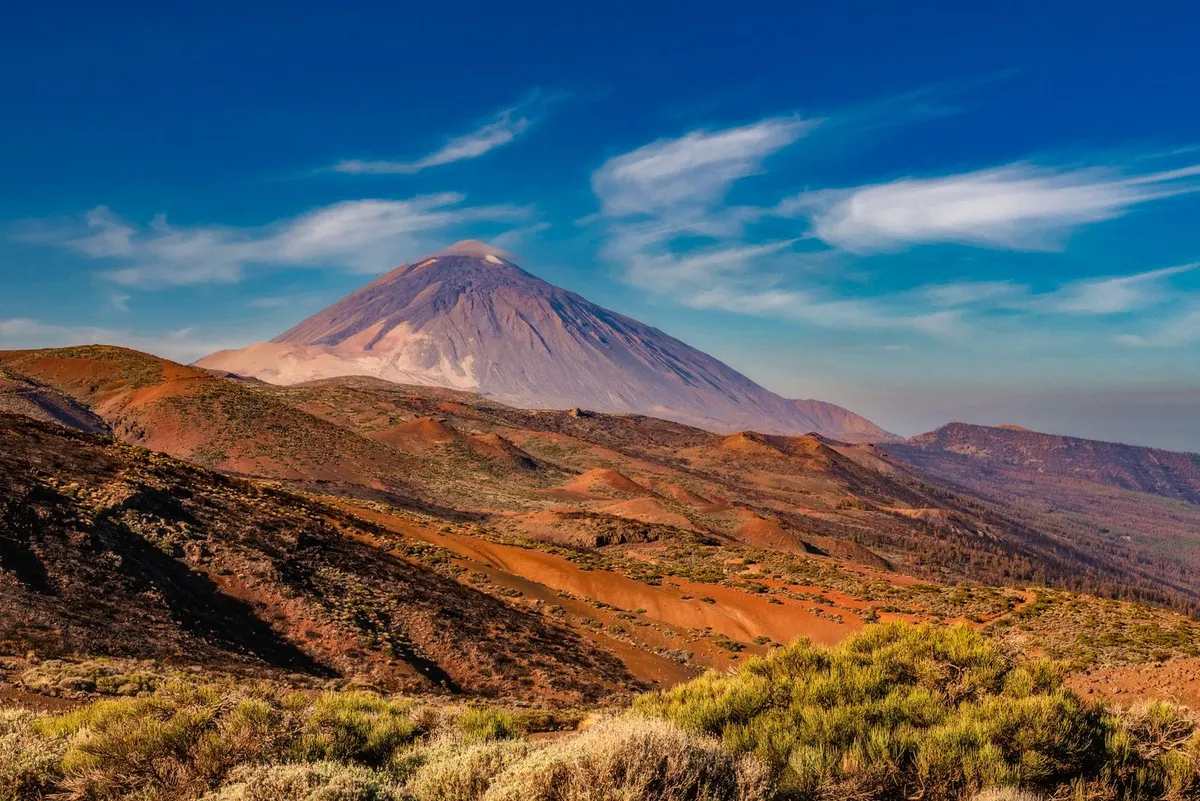
Mount Teide is a 3,718m active volcano in central Tenerife, Spain, designated a UNESCO World Heritage site in 2007. The national park around it is free to enter. Most visitors drive the TF-21 for the cable car, the volcanic landscape, and the stargazing the summit observatory was built for.
This guide covers the part most people get wrong. Which road to take, the order to work through the stops, whether the cable car is worth your money, and how to actually stand on the 3,718m peak. It is built for first-timers driving up from the south resorts, with the practical detail you need before you set off.
At a glance
Teide at a glance
- Mount Teide stands 3,718m, the highest peak in Spain.
- UNESCO World Heritage site since 2007.
- Entry is free. No public entry fee is in place as of June 2026.
- The park floor sits at roughly 2,000m. This is a genuine high-mountain environment, not a coastal day out.
- The cable car runs from a 2,356m base station to a 3,555m top station.
- Nearest access towns are Vilaflor on the south side and La Orotava on the north, both on the TF-21.
The basics
What Teide National Park actually is
Teide National Park is the high volcanic crater at the centre of Tenerife, built around Mount Teide, the 3,718m active volcano that is the highest point in Spain. The park floor sits near 2,000m, so the air is thinner and the temperature noticeably cooler than the beaches an hour below.
The Guanches, the island's original inhabitants, had their own account of the mountain. In their legend the supreme god Achamán imprisoned the malevolent deity Guayota inside Teide. When the volcano rumbled, that was Guayota trying to get out. You will see the name across the park, and it explains why the peak mattered long before tourism arrived.
Getting there
Getting there: which road you take changes your day
One main road runs into the park, the TF-21, and it climbs from both coasts. Where you start from shapes the whole day.
From the south resorts, expect about 1 hour 8 minutes from Costa Adeje to the cable car base, climbing through Vilaflor. From the north, it is roughly 1 hour from Puerto de la Cruz, climbing through La Orotava. Both sides meet on the same spine road across the top of the park.
Here is the move most day-trippers miss. Because both approaches are about an hour and land on the same road, the best plan is to go up one side and come down the other. Drive up from the south through Vilaflor, cross the park, and descend the north road through La Orotava. You see the full sweep of the landscape in a single pass instead of retracing your route.
The route
The stops, in the order worth hitting them
The park is not a single attraction. It is a sequence of stops along the TF-21, and coming up from the south the order almost sorts itself.
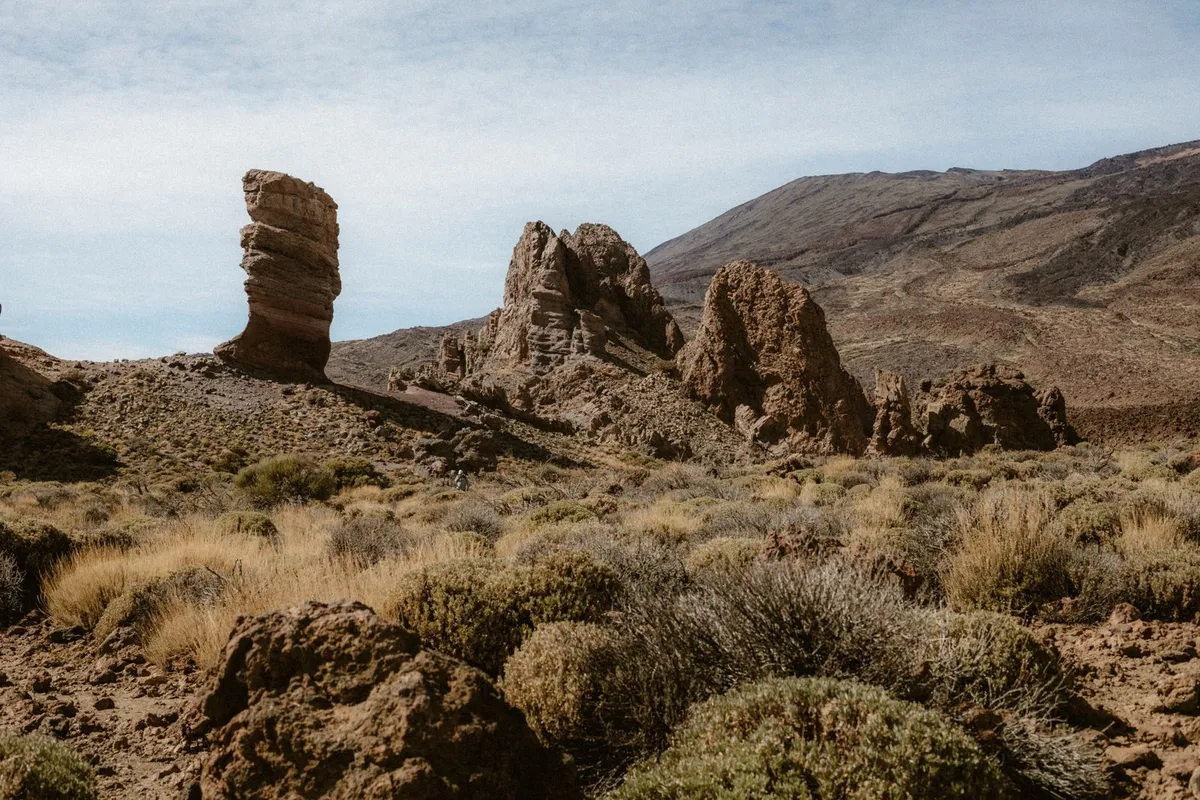
Roques de García is the one everyone photographs, a cluster of weathered volcanic rock formations rising straight out of the crater floor. It is also the first major stop you reach climbing up through Vilaflor. The catch is the crowd. Arrive before 10:00 or after 16:00 and you skip the tour-bus peak entirely. In between, the car park and the viewpoints fill with coach groups.
A few minutes further on sits the cable car, or teleférico, which carries you from the 2,356m base to a 3,555m top station. The queue spikes mid-morning when the coach tours roll in, so book a timed ticket online and aim for early or late.
El Portillo Visitors' Centre comes as the road bends toward the north exit. It has an information point, a botanical garden, and a geology exhibition, which makes it the place to pick up trail maps and break the drive before you start the descent toward La Orotava.
The Teide Observatory rounds out the high-altitude stops. Access is by guided tour only and must be booked in advance, so it is a plan-ahead visit rather than a drive-up.
The verdict
The cable car: worth it, or take the free trails?
The cable car is worth the money, with one honest catch you should know before you pay.
It lifts you from 2,356m to 3,555m in about eight minutes, saving you a long, steep climb and delivering the panorama people come for: the crater below, the cloud layer often sitting beneath you, and La Gomera on the horizon on a clear day. For most visitors, that ride alone justifies the ticket.
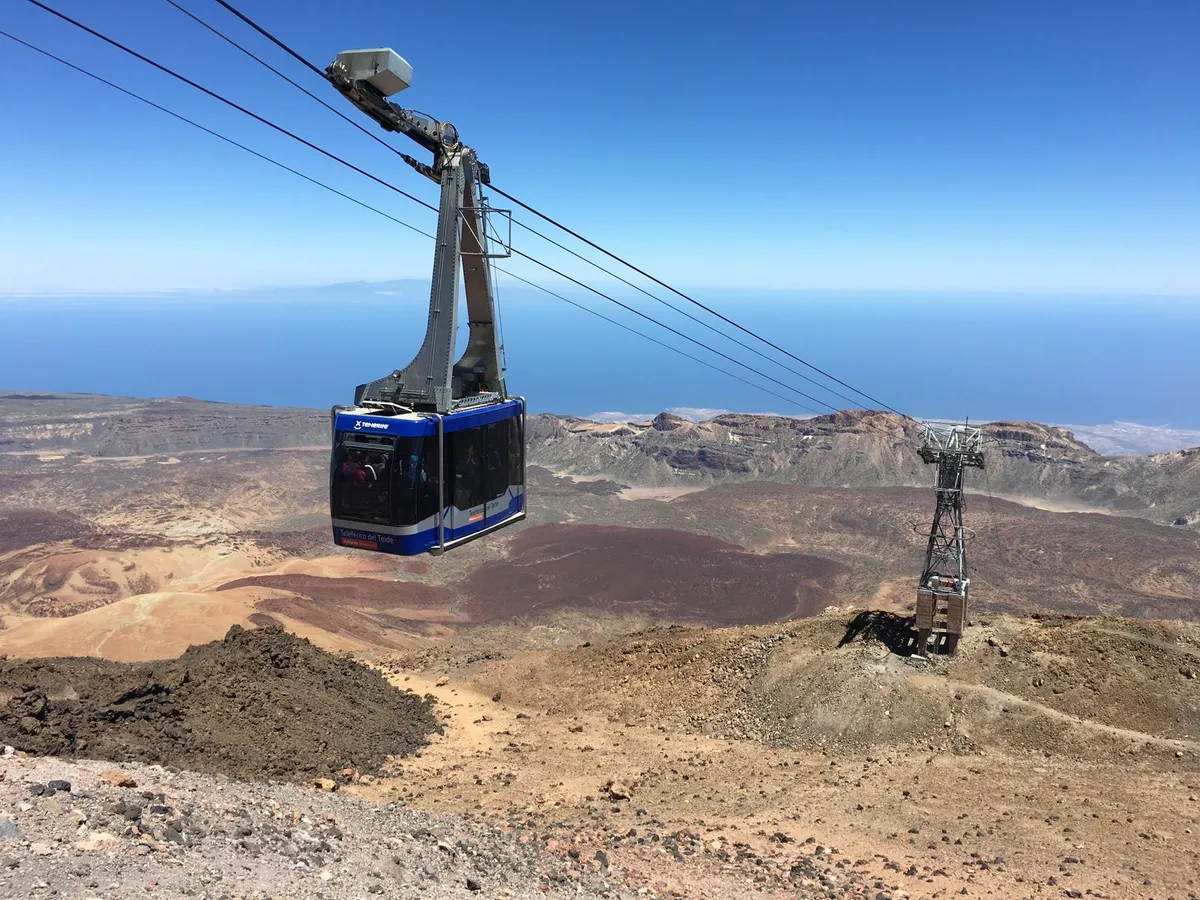
The catch is that the top station is not the summit. It stops at 3,555m, about 163m short of the true 3,718m peak, and reaching the top from there needs a separate permit covered in the next section. So pay for the cable car for the ride and the views, not for the summit itself.
You can book the cable car to the summit ahead with a timed slot, which is the single best way to dodge the mid-morning queue.
The summit
Standing on the actual summit: the permit nobody explains
To stand on the 3,718m peak you need a permit for the Telesforo Bravo trail, the final stretch above the cable car top station.
You book it online through Tenerife ON (tenerifeon.es), the Island Council platform. Since January 2026 it costs €15 for non-residents, free for Tenerife residents and under-14s, and the number of daily slots is limited, so reserve it before you travel rather than hoping to sort it on the day.
This is the detail that catches people out. Plenty ride the cable car expecting to walk to the top, then find the summit path gated because they never applied. Sort the permit first, and the cable car ride becomes the start of the climb rather than the end of it.
After dark & off-road
What else to do up here
The landscape works in daylight, but the park earns its reputation after dark.
The skies above Teide are why the observatory sits where it does, and a guided night trip turns the altitude and the lack of light pollution into one of the better stargazing experiences in Europe. Book stargazing on Teide for the telescopes and a guide who can actually read the sky.
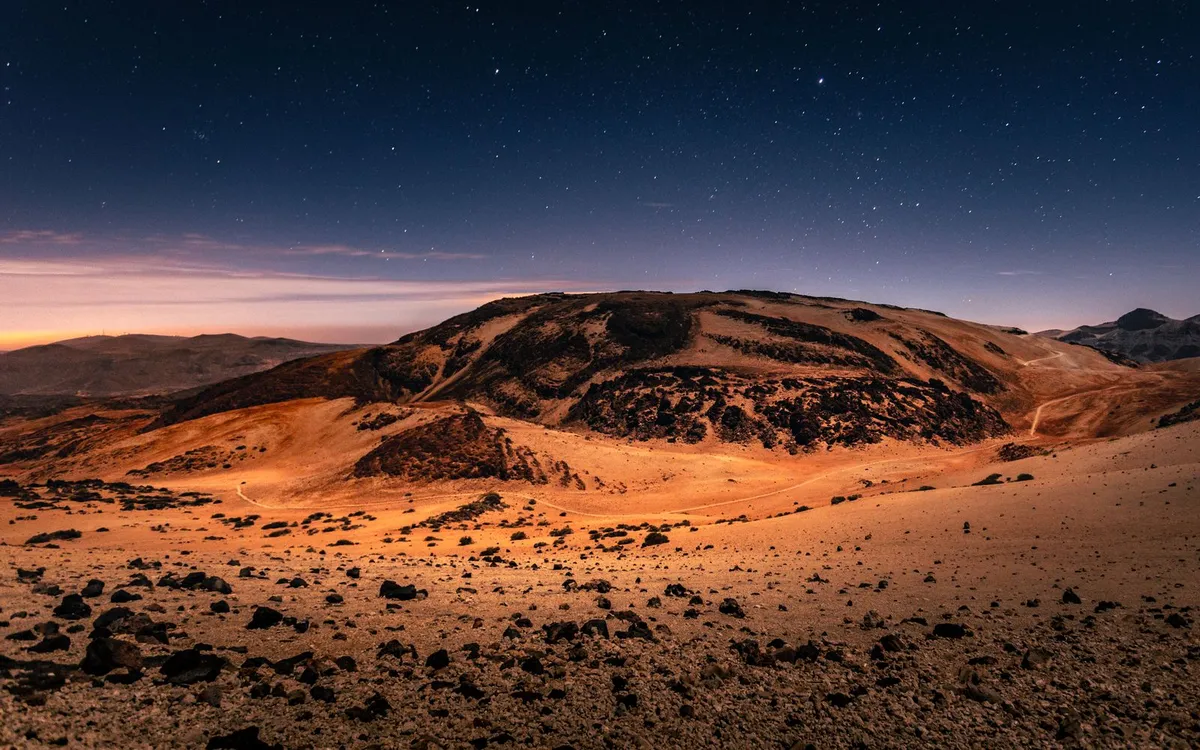
If you want the crater to yourself at the best hour, a private sunset trip times your visit for the light most day-trippers miss while they are stuck in traffic heading back down.
For something more active, a buggy tour takes you off the main viewpoints and onto the tracks through the volcanic terrain.
Before you go
Before you go: closures, fees, and what to pack
Two things to check, one thing to pack properly.
Check closures first. Storm Theresse left some routes and facilities partially restricted, confirmed as of June 2026, so look at the live park status before you commit to a specific trail or viewpoint.
On fees, the park remains free to enter, with no public entry fee in place as of June 2026. That is worth confirming close to your trip, since access rules can change.
Now the packing, because this is where coastal visitors get caught out. At over 3,500m the cable car top station is cold and exposed even when the resorts are in the high 20s. Bring long trousers, a fleece or warm layer, proper hiking boots, and an emergency blanket, in summer included. People step off the cable car in shorts and flip-flops and regret it within minutes.
Good to know
Frequently asked questions
Is Teide National Park free to visit?
Yes. The park is free to enter, with no public entry fee in place as of June 2026. You only pay for extras like the cable car, guided tours, or activities. Fees can change, so confirm close to your trip.
Is Teide National Park worth visiting?
Yes, and it is the one inland trip worth making from the south coast. It is the highest peak in Spain, a UNESCO World Heritage site, and free to enter, with a volcanic landscape that looks nothing like the rest of the island. Give it a full day rather than a rushed half.
How much is the cable car to Mount Teide?
An adult round-trip ticket starts from $44, checked June 2026. The live price sits on the official booking page. Remember the cable car stops at the 3,555m top station, not the 3,718m summit, which needs a separate permit (€15 for non-residents).
What movies were filmed at Mount Teide?
The most famous is Clash of the Titans (2010), which used the park to stand in for ancient Greece, along with its 2012 sequel Wrath of the Titans. Other productions include One Million Years B.C. (1966), Fast & Furious 6 (2013), Rambo: Last Blood (2019), and a 2015 Doctor Who episode. Despite the persistent local rumour, Star Wars and Planet of the Apes were never filmed here — those are debunked tour-guide myths.
Plan it
Plan your day on Teide
Teide rewards a plan more than a wander. Sort the cable car slot, decide whether you want the summit permit, and pick your timing around the crowds rather than against them.
For the headline experience, book the cable car to the summit with a timed ticket. For the part of the park most visitors never see, add stargazing on Teide after dark. Both, and a few more options up here, sit alongside the rest of the island's things to do in Tenerife.
Last updated June 2026 · fees and closures checked June 2026.
Related on TenerifeTourism
Sources for this guide: UNESCO World Heritage Centre (World Heritage designation), the official Teide cable car operator (Volcano Teide / volcanoteide.com) for cable car heights and prices, and Tenerife ON (tenerifeon.es), the Island Council platform, for the summit permit, park status, closures and fees. Prices verified at time of writing.
About our research
TenerifeTourism.com is an independent travel research hub. Our editorial team compiles each guide from official sources — the TITSA transport authority, the Canary Islands tourism board, and hotel operators' own data — and we flag clearly when a detail is confirmed versus estimated. Read our full methodology.