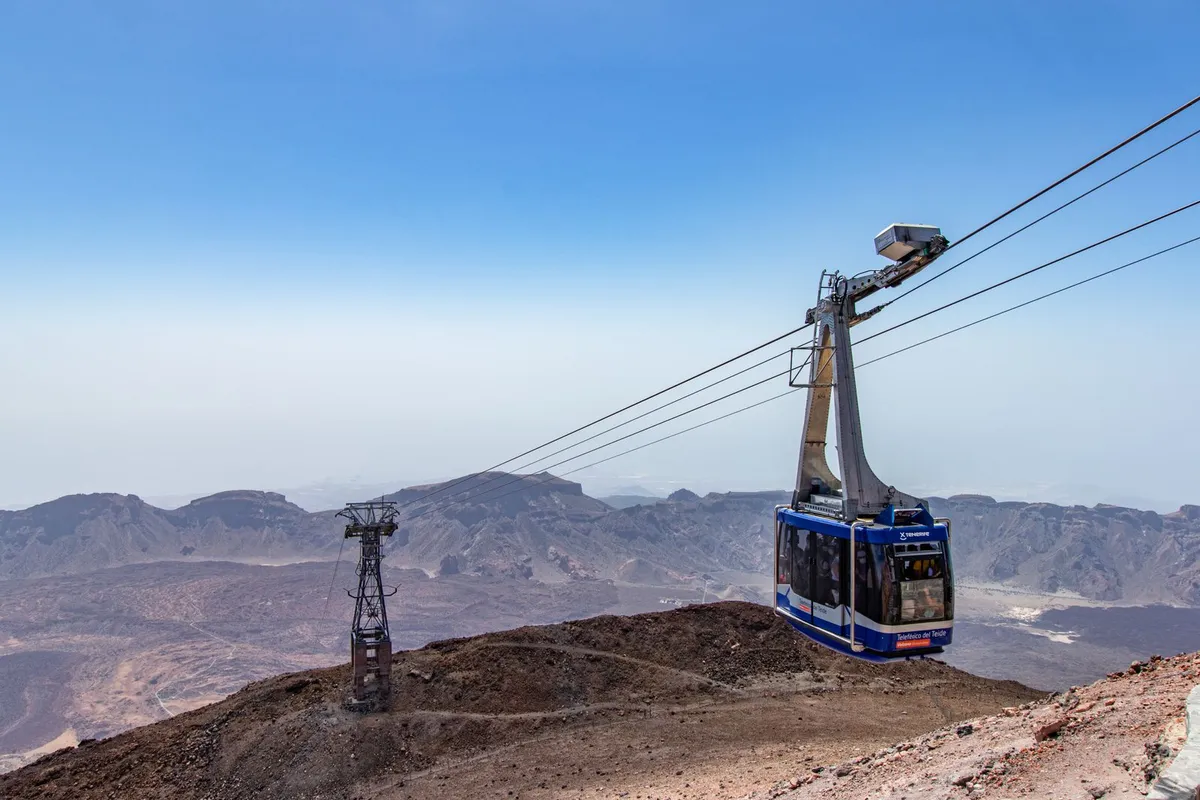
The Teide National Park cable car climbs from 2,356 m to the La Rambleta top station at 3,555 m in under 8 minutes, a vertical gain of 1,199 m. One-way fares start at €23.50 (about $25), with return tickets higher. It is worth it for the views, but the ride ends 163 m below the summit and depends entirely on the weather, so check live conditions before you book.
This guide covers the ride itself, the three ways to book it, what you actually see at the top, the permit you need for the summit cone, and how to reach the base station from the south. For the wider park, see our Teide National Park guide.
The ride
The cable car ride, minute by minute
The ride takes under 8 minutes from base to top. Cabins carry up to 44 passengers and run on Teleférico del Teide, the official operator. You start at the base station at 2,356 m and step out at La Rambleta, 3,555 m, having gained 1,199 vertical metres in those few minutes.
The altitude is the part most people underestimate. You go from resort-level warmth to over 3,500 m in under 10 minutes, so the air is thinner and noticeably colder at the top, even in July. Take a layer, whatever the temperature was when you left the coast.
How to book
Three ways to ride the Teide cable car
Your real decision is not whether to ride, it is how you get there and how you book. There are three routes, and they suit very different travellers. Here is each one side by side so you can match it to your trip in one scan.
| Option | What you get | Price | Best for | The catch |
|---|---|---|---|---|
| Direct return ticket | Cable car up and down only, no transport | Non-resident one-way from €23.50 | Independent travellers with their own car | Book ahead, no transport support, exposed if wind closes the line that day |
| Guided tour with transfer | Door-to-door pickup, cable car, guide | From around $100 | Anyone without a car who wants it handled | Fixed itinerary and timings |
| Buy at the base station | Walk-up ticket on the day | Same official fare | Almost nobody | Queues, and timed return slots can run an hour or more out on busy mornings |
The direct ticket is the cheapest and the most flexible if you have a hire car. The guided tour costs more but removes every logistical headache, which is the right call if you are not driving. Buying at the base is the one route I would avoid: you gain nothing and risk a wasted morning if the slots are backed up.
Most visitors ride this as a day trip from the south coast. If you are still choosing a base, Costa Adeje sits about 70 minutes from the base station and has the widest spread of hotels for the trip, including the cluster of luxury hotels in Costa Adeje near the motorway up.
At the top
What you see from the top station, and what you don't
Two viewpoints sit a short walk from the top station, and both are free with no permit. La Fortaleza looks north over the crater rim and the island below. Pico Viejo faces south over its own 800 m crater, the wider and more dramatic of the two.
Here is the expectation gap nobody mentions at the ticket desk. The cable car does not take you to the summit. It stops at 3,555 m, and the actual peak of Pico del Teide sits 163 m higher at 3,718 m. To stand on the summit cone you need a permit, which I cover below. Most people are perfectly happy with the top-station viewpoints, but if your plan was the summit photo, know that the ride alone will not get you there.
The verdict
Is the Teide cable car worth it, and who should skip it
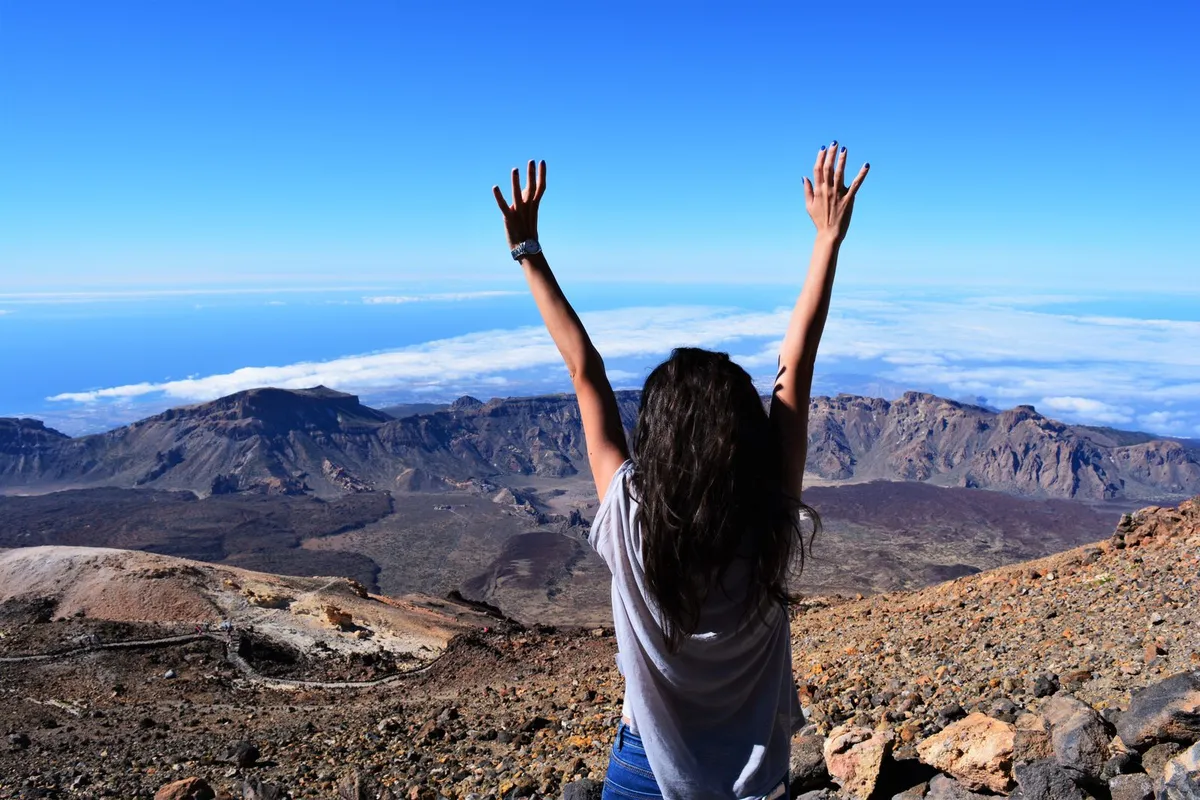
Yes, for most people, with one firm condition. On a clear day, standing above the cloud sea at 3,555 m with La Gomera and La Palma on the horizon is a genuine bucket-list view. That is the version that earns the trip.
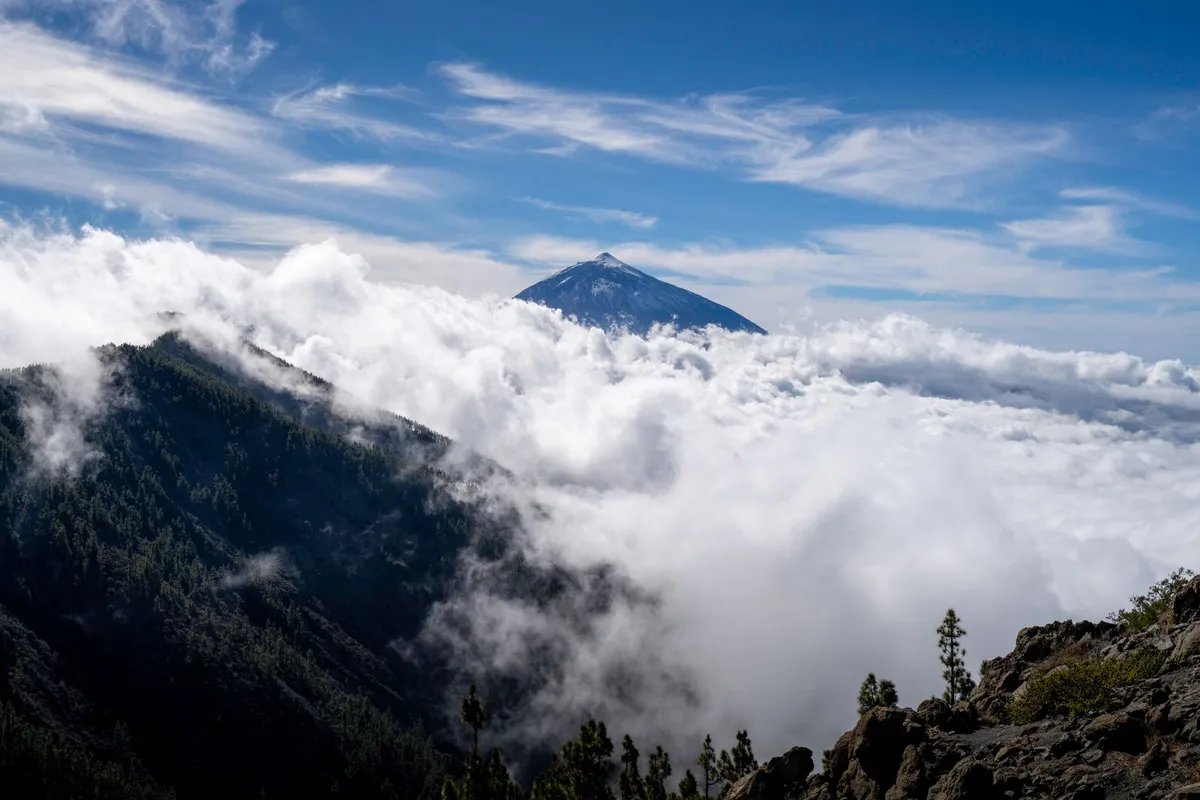
The condition is the weather, and it is not negotiable. On a whiteout day, when cloud sits at the top station rather than below it, you pay full fare to stand in fog and see nothing. The cable car also closes at short notice for high wind or snow, sometimes after you have driven 70 minutes to reach it. Check the official "Teide Today" live status the morning you go, and treat that check as a requirement, not a suggestion.
Skip the ride if you are short on time and the forecast is poor, if altitude affects you (3,555 m is high enough to leave some people light-headed), or if cloud is forecast to sit on the summit. If you want Teide at its best moments instead, stargazing on Teide after dark and a Teide sunset tour both deliver more reliably than a cloudy midday ride.
The summit
Reaching the summit: the Telesforo Bravo permit
The final 163 m to the summit cone is gated by the PNT 10 Telesforo Bravo permit, and it is no longer free. Non-residents pay €15 (about $16) without a guide or €10 (about $11) with a licensed guide, and under-14s go free. You book it on Tenerife ON (tenerifeon.es), the official Island Council platform, which is web-only for now.
Two things to plan around. The permit is separate from your cable car ticket, and it is valid only for its specific date and time slot, whether or not the cable car runs that day. Slots are capped at around 300 people daily, and a new week opens every Monday at 07:00 Canary time on a rolling 28-day window, so plan to book when the window for your date opens. Carry the reservation and your ID on the trail, as checks happen and fines reach €600.
Getting there
Getting to the cable car base station
The base station sits at 2,356 m, about 1 hour 10 minutes by car from the south resorts of Costa Adeje and Los Cristianos. The drive up the TF-1 and then the mountain road is straightforward, and the scenery through the caldera is part of the day.
Parking is free at the base, with 220 spaces, though access is restricted outside operating hours. By bus, line 342 is the only southern service to the park, and it runs one round trip a day, so it works only if your timings are tight and fixed. For most south-coast visitors, a hire car or a guided tour with transfer is the realistic way up.
Good to know
Frequently asked questions
Is Mount Teide cable car worth it?
On a clear day, yes. The view from the 3,555 m top station over the cloud sea and neighbouring islands is one of the best in Spain. The catch is weather: on cloudy or whiteout days you see very little, and the line closes for high wind, so check the live “Teide Today” status before you set off.
How much is the cable car to Teide?
Non-resident one-way fares start at €23.50, with return tickets higher. Book through the official site or a tour operator for the current rate. The summit permit is separate and costs €15 for non-residents without a guide, or €10 with one, and under-14s go free.
How long is the cable car ride up Mount Teide?
Under 8 minutes each way. It climbs 1,199 vertical metres, from the 2,356 m base station to La Rambleta at 3,555 m. Cabins hold up to 44 passengers and run throughout the day within the seasonal timetable.
Can I climb Teide without a permit?
You can ride the cable car and walk the free top-station viewpoints, La Fortaleza and Pico Viejo, with no permit at all. To stand on the actual summit cone at 3,718 m you need the PNT 10 Telesforo Bravo permit, booked via Tenerife ON. Without it you must turn back at 3,555 m.
Prices and permit rules checked June 2026.
Related on TenerifeTourism
Sources for this guide: the official Teide cable car operator (Teleférico del Teide / volcanoteide.com) for the ride, heights, capacity and fares; Tenerife ON (tenerifeon.es), the Island Council platform, for the PNT 10 Telesforo Bravo summit permit, its fees, daily cap and booking window; and the national park authority for access and the line's live operating status. Prices and permit rules checked June 2026.
About our research
TenerifeTourism.com is an independent travel research hub. Our editorial team compiles each guide from official sources — the TITSA transport authority, the Canary Islands tourism board, and hotel operators' own data — and we flag clearly when a detail is confirmed versus estimated. Read our full methodology.