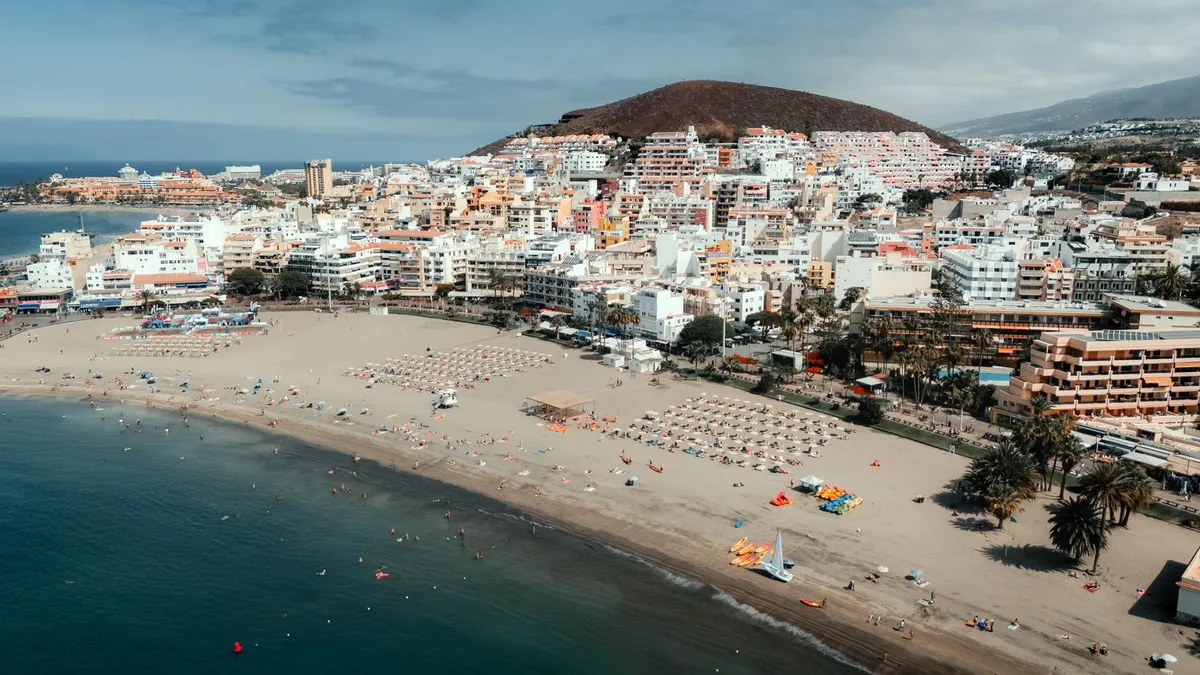
South Tenerife stays warm all year. August is hottest, averaging 28.4°C (83.1°F) by day, and January coolest at about 21.7°C (71.1°F). July is the best all-round month: near-zero rain, the most sunshine, and a sea near 21–22°C. One honest caveat: the water only passes comfortable-swim warmth (around 20°C) from June.
This page uses official climate normals, not a forecast. It breaks the year down month by month for the south-coast resort belt, then compares the south, the north and Mount Teide, covers sea temperatures, and explains the calima most guides skip.
Climatological normals 1981–2010, AEMET (official). South-coast figures: Tenerife Sur Aeropuerto station (C429I, 64m). Checked June 2026.
Warmest month
August
28.4°C / 83°F average high
Warmest sea
August–September
Around 24°C / 75°F
Sunniest & driest
July
9.5 sun hours a day, near-zero rain
Rainiest month
December
Wettest at 30mm, three to four wet days
At a glance
Tenerife weather at a glance, month by month
Here is every month on the south coast in one scan, so you can match your trip to the climate you want. Figures are daytime high and overnight low, average rainy days, average daily sunshine, and sea temperature.
Today on the south coast
Playa de Fañabé, Costa Adeje · updated 08:50, Thursday 3 September. The table below shows long-term climate normals, not a forecast. Auto-updates daily. Source: © AEMET.
| Month | High °C / °F | Low °C / °F | Rain days | Sun hrs/day | Sea °C / °F* |
|---|---|---|---|---|---|
| January | 21.7 / 71.1 | 15.2 / 59.4 | 1.8 | 6.2 | ~19 / 66 |
| February | 22.0 / 71.6 | 15.0 / 59.0 | 2.2 | 7.0 | ~19 / 66 |
| March | 23.1 / 73.6 | 15.6 / 60.1 | 1.9 | 7.3 | ~19 / 66 |
| April | 23.1 / 73.6 | 16.0 / 60.8 | 1.1 | 7.3 | ~19 / 66 |
| May | 23.9 / 75.0 | 17.0 / 62.6 | 0.3 | 7.9 | ~19 / 67 |
| June | 25.4 / 77.7 | 18.8 / 65.8 | 0.0 | 8.6 | ~21 / 70 |
| July | 27.7 / 81.9 | 20.2 / 68.4 | 0.0 | 9.5 | ~22 / 72 |
| August | 28.4 / 83.1 | 21.1 / 70.0 | 0.2 | 8.9 | ~24 / 75 |
| September | 27.9 / 82.2 | 21.1 / 70.0 | 0.6 | 7.1 | ~24 / 75 |
| October | 26.8 / 80.2 | 20.0 / 68.0 | 1.6 | 6.9 | ~21 / 70 |
| November | 24.8 / 76.6 | 18.2 / 64.8 | 1.9 | 6.4 | ~21 / 70 |
| December | 22.8 / 73.0 | 16.5 / 61.7 | 3.5 | 6.3 | ~20 / 68 |
*Sea temperatures are archival buoy averages (Puertos del Estado, buoy 2633), indicative rather than official normals. Sunshine is derived from monthly AEMET totals.
The seasons
Season by season: the real picture
Winter
Dec – Feb
Days 21–23°C with about seven hours of sun; sea 18.5–19°C. Reliable winter sun by day, cool for swimming.
Spring
Mar – May
Days 23–24°C, rain fading to near-dry by May, sea around 19°C. The quiet sweet spot.
Summer
Jun – Aug
Days 27–28°C, effectively dry, sea at its warmest up to 24.5°C. Peak heat and crowds.
Autumn
Sep – Nov
Days easing from 27°C, the year's warmest sea, low rain until November. Underrated value.
Winter (December to February) is the headline. Daytime highs sit at 21.7 to 22.8°C (71 to 73°F) with seven hours of sun, which is reliable winter sunbathing weather by day. The honest part: nights cool to about 15°C (59°F), and the sea is only 18.5 to 19°C, cool for most swimmers. December is the wettest month at 30mm, but that still works out to three or four wet days.
Spring (March to May) is the quiet sweet spot. Rain falls away fast, with May effectively dry (1mm across less than one rainy day) and sunshine climbing toward eight hours. Highs reach 23 to 24°C. The water is still bracing at around 19°C, so this is a sun-lounger season more than a swimming one.
Summer (June to August) is hot, dry and busy. July and August highs hit 27.7 to 28.4°C (82 to 83°F), rain is effectively zero, and the sea is at its warmest (August 23 to 24.5°C). This is also peak calima season, covered below. Guaranteed beach weather, but the most crowded and most expensive window of the year.
Autumn (September to October) is the underrated stretch. September and October hold summer's warmth (highs 26.8 to 27.9°C) and carry the year's warmest sea, while rain stays low until November jumps to 26mm. Late September and early October give you August's climate without August's prices.
One island, three climates
North vs south vs the mountain: why one Tenerife has three climates
The weather that sells Tenerife is the south-coast weather, and the island has at least three. The south resort belt is dry and sunny. The northern cloud belt is green for a reason. Mount Teide runs its own alpine climate above both.
| Zone | Winter day high | Summer day high | Rain per year | Character |
|---|---|---|---|---|
| South coast (Tenerife Sur, 64m) | 21.7°C / 71°F | 28.4°C / 83°F | 132mm, ~15 days | Dry, sunny resort belt |
| North cloud belt (La Laguna, 632m) | 16.0°C / 61°F | 25.7°C / 78°F | 520mm, ~64 days | Cooler, cloudier, greener |
| Teide summit (Izaña, 2369m) | 7.5°C / 46°F | 22.6°C / 73°F | Snow on ~8–9 days Dec–Mar | Alpine, freezes overnight |
The contrast is not subtle. The south coast logs 132mm of rain over roughly 15 days a year. The La Laguna cloud belt logs 520mm over 64 days, four times wetter and 5 to 6°C cooler in winter. That single gap is the heart of the north vs south Tenerife question.
One thing to watch when you compare averages online. The "south" most people picture is the resort coast around Costa Adeje and Los Cristianos, not an island-wide blend. A generic "Tenerife weather" average can fold in the wet northern figures and read cooler than the coast you are actually booking. The resort coast runs drier and sunnier than that blend.
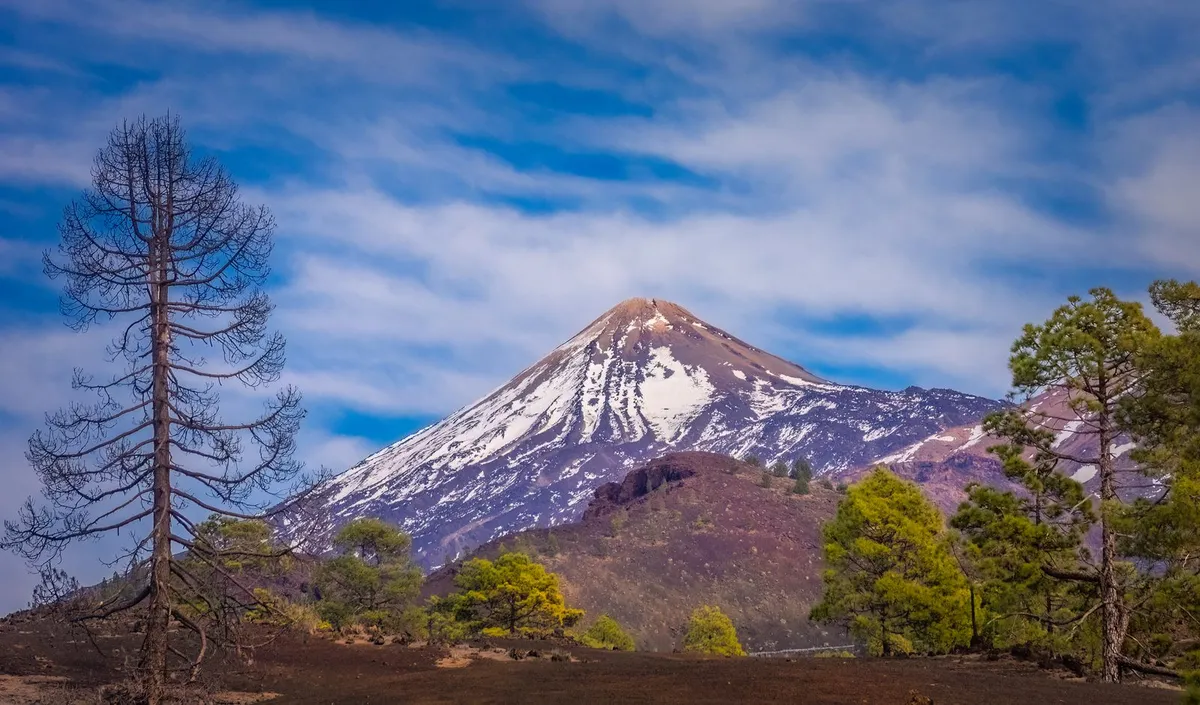
The mountain is a genuine third option, not a footnote. Teide carries snow on roughly eight or nine days between December and March while the coast below stays in the low twenties, which is the one place in Spain you can photograph snow above a beach in the same morning. Plan altitude days around the Teide National Park forecast, not the coastal one, and check conditions before booking the Mount Teide cable car, which closes in high wind.
Calima: the weather event the brochures leave out
Calima is the one weather event the brochures leave out. It is a Saharan-dust intrusion that brings haze, reduced visibility, sharp heat spikes and poorer air quality for sensitive groups. It is most frequent in summer but often most intense between January and March. Episodes are unpredictable and usually short-lived, but worth knowing if you have asthma or you are chasing clear Teide views.
In the water
Sea temperature by month
The sea is the figure the air-temperature tables quietly skip. On the south coast it sits at about 18.5 to 19°C (65 to 66°F) from January to March, its coolest stretch, warms slowly through spring, and only crosses the comfortable-swim line of roughly 20°C from June.
It peaks at 23 to 24.5°C (73 to 76°F) across August and September, then holds above swimmable into December. So the practical swimming window is about June to December.
Two honest notes. These are archival buoy averages, indicative rather than certified normals, so treat them as a guide. And "comfortable" is personal: plenty of UK visitors swim happily in February water that others find too cold, so the 20°C threshold is a marker, not a rule.
The verdict
Best time to visit, and the month to skip for value
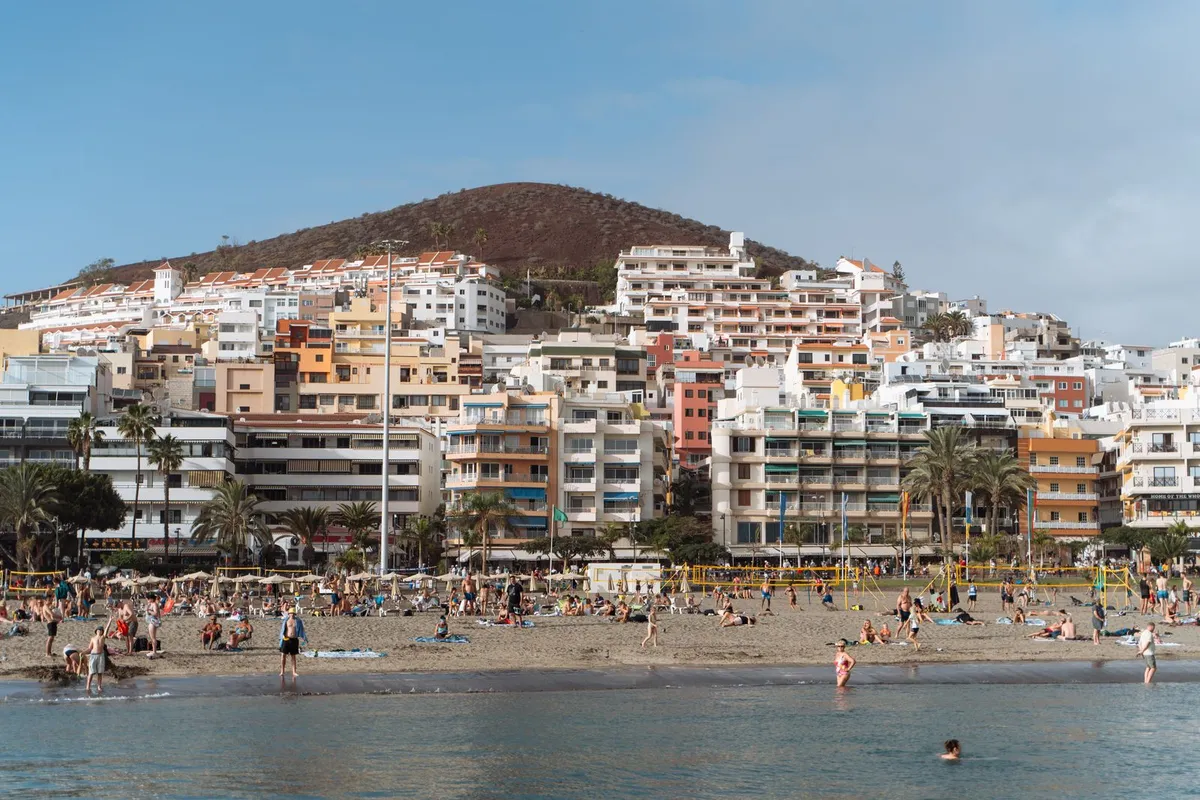
For pure weather, July wins. Near-zero rain, the most sunshine of the year at about 9.5 hours a day, and a sea around 21 to 22°C. If you only care about the climate working, July is the safe pick.
Here is the redirect that saves money. August gets the bookings because it lines up with the UK school holidays, but on weather-value it is the weakest of the warm months: peak crowds, peak prices, peak calima odds, and a climate barely different from late September. Shift a few weeks to late September or early October and you get near-identical highs (26.8 to 27.9°C), the year's warmest sea, and noticeably lower prices. Now you know. For a fuller breakdown, see best time to visit Tenerife.
Once you have your month, the next decision is your base. The dry, sunny figures on this page come from the south coast, and Costa Adeje sits at the calm, upmarket end of that strip, fronting Costa Adeje's sheltered beaches.
For a special-occasion stay, the cliff-side and beachfront five-stars cluster here, with private pools and direct beach access that earn the rate.
For a couples or adults-only trip built around the warmest months, the south's adults-only properties keep the pool decks quiet.
Packing
What to pack, by season
- Winter (December to February): t-shirt weather by day, but pack a jumper and a light jacket for evenings that drop to about 15°C, plus a thin rain layer for December.
- Spring (March to May): light layers, high-factor sun cream, and swimwear for sunbathing more than swimming, since the sea is still around 19°C.
- Summer (June to August): sun cream, a hat, a refillable water bottle, and patience for the odd calima haze day. Evenings stay warm, so you can leave the jacket at home.
- Autumn (September to November): beach kit right through October, then a light layer for cooler November evenings and the occasional late-month shower.
Good to know
Frequently asked questions
What is the best month to go to Tenerife?
July for pure weather: near-zero rain, the most sunshine at about 9.5 hours a day on the south coast, and a sea around 21 to 22°C. For similar warmth with smaller crowds and lower prices, late September and early October are the smarter value picks. August offers the same climate at the highest prices, so skip it if you can.
Can I sunbathe in Tenerife in February?
Yes, by day. The south coast averages about 22°C (71.6°F) in February with seven hours of sun, which is comfortable sunbathing weather. Swimming is another matter, as the sea sits around 18.5 to 19°C (65 to 66°F), cool for most. Pack a jumper for evenings, when lows drop to roughly 15°C.
Is Tenerife hotter than other Canary Islands?
We only publish island-to-island temperature claims we can source to official normals, and that comparison data is not in this page's verified set, so we will not guess. What the official figures do show is that Tenerife's south coast is one of the warmest, driest corners of the island itself, with about 132mm of rain a year against 520mm in the northern cloud belt, because the south sits in Mount Teide's rain shadow.
Does it rain in Tenerife?
Yes, but very little in the south. The south coast records about 132mm across roughly 15 rainy days a year, most of it in November and December at 26 to 30mm each. May to August are effectively dry at 0 to 1mm. The north is a different climate: the La Laguna cloud belt gets about 520mm over 64 rain days, which is why the north is green and the south is not.
Is there a real difference between north and south Tenerife weather?
A large one. The south coast averages 132mm of rain over about 15 days a year. The northern cloud belt around La Laguna, at 632m, averages 520mm over 64 days, four times wetter, 5 to 6°C cooler in winter, and far cloudier. Mount Teide adds a third climate entirely, with snow on roughly eight or nine days between December and March.
Related on TenerifeTourism
Sources for this guide: AEMET (Agencia Estatal de Meteorología) 1981–2010 climatological normals for temperature, rainfall and sunshine, from the Tenerife Sur Aeropuerto (C429I), La Laguna and Izaña stations; and Puertos del Estado (buoy 2633) archival averages for sea temperature, shown as indicative. Checked June 2026.
About our research
TenerifeTourism.com is an independent travel research hub. Our editorial team compiles each guide from official sources — the TITSA transport authority, the Canary Islands tourism board, and hotel operators' own data — and we flag clearly when a detail is confirmed versus estimated. Read our full methodology.